Address
304 North Cardinal St.
Dorchester Center, MA 02124
Work Hours
Monday to Friday: 7AM - 7PM
Weekend: 10AM - 5PM
Address
304 North Cardinal St.
Dorchester Center, MA 02124
Work Hours
Monday to Friday: 7AM - 7PM
Weekend: 10AM - 5PM
Real-time AI processing at the edge for faster decisions, stronger privacy, and smarter systems.
Edge AI enables artificial intelligence to run directly on devices such as sensors, cameras, machines, and mobile hardware. Instead of relying entirely on centralized cloud servers, data is processed locally—delivering instant insights and actions exactly where they are needed.
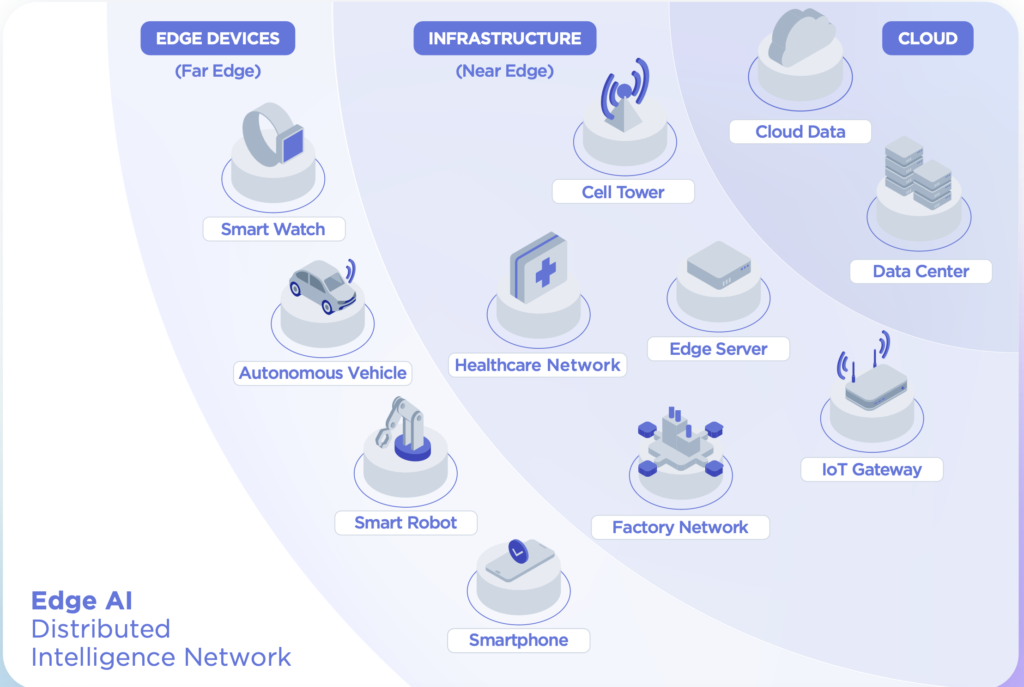
Edge AI combines artificial intelligence with edge computing to analyze data close to its source. This approach minimizes delays caused by data transmission, improves reliability in low-connectivity environments, and ensures faster response times.
Unlike cloud-only AI models, Edge AI allows systems to function independently, making them ideal for mission-critical and real-time applications.
Best suited for:
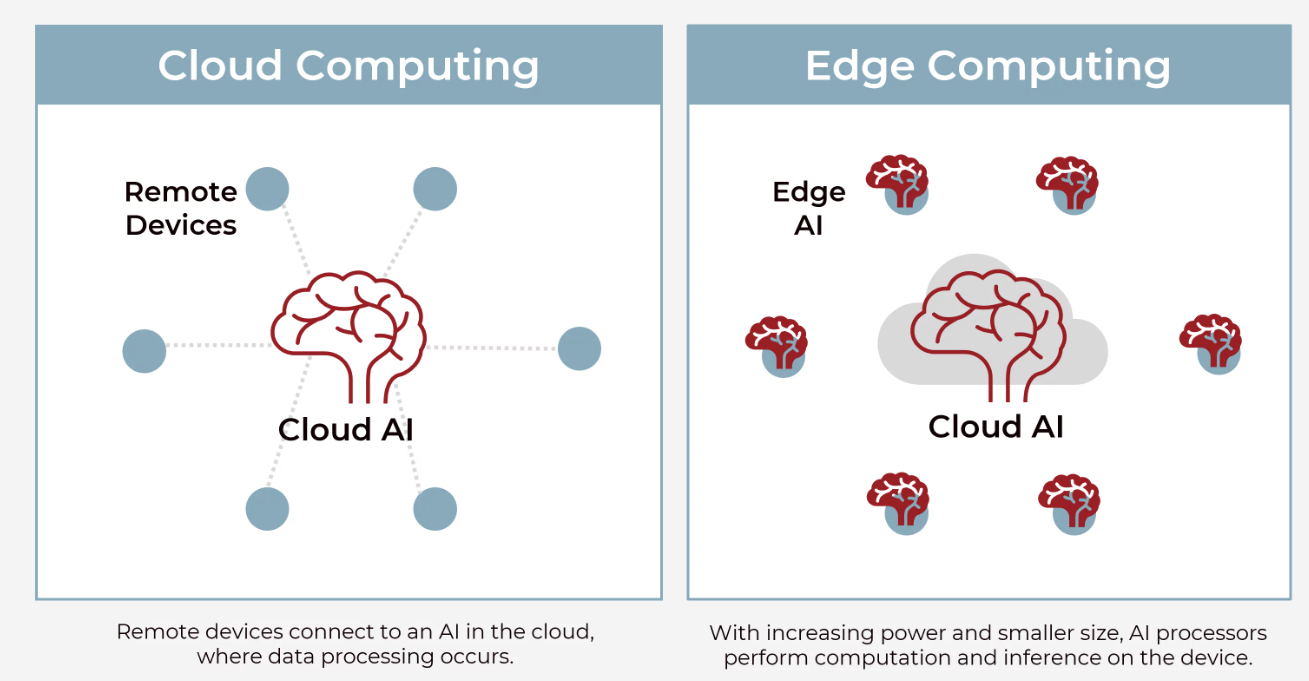
Edge AI refers to running artificial intelligence models directly on devices where data is generated, such as sensors, cameras, smartphones, industrial machines, and IoT devices. Instead of sending raw data to centralized cloud servers for processing, Edge AI enables analysis and decision-making to happen locally or near the data source. This approach significantly reduces delays and allows systems to respond in real time.
One of the biggest advantages of Edge AI is low latency. Because data does not need to travel back and forth to the cloud, actions can be taken almost instantly. This is critical for use cases like autonomous vehicles, industrial automation, video analytics, and medical monitoring, where even a small delay can have serious consequences.
Edge AI also improves data privacy and security. Sensitive information can be processed on the device itself, minimizing exposure to external networks and reducing the risk of data breaches. This makes Edge AI especially valuable in industries that must comply with strict data protection and regulatory requirements.
Additionally, Edge AI helps reduce bandwidth usage and operational costs. Only meaningful insights or summarized data need to be sent to the cloud, rather than large volumes of raw data. As a result, organizations can build more efficient, reliable, and scalable systems that continue to function even in environments with limited or unreliable internet connectivity.
Overall, Edge AI is a key enabler of smarter, faster, and more autonomous systems, bringing intelligence closer to where real-world actions actually happen.
Key Benefits of Edge AI
Processing locally means it is done more quickly, reducing the time to action
Edge processing reduces bandwidth, cost and storage requirements in the data center or cloud
Improving data sovereignty and reducing the risk of breach of corruption in transit
How Edge AI Works
| Feature | Edge AI | Cloud AI |
|---|---|---|
| Processing Location | On-device / near source | Centralized data center |
| Latency | Extremely low | Higher |
| Internet Dependency | Minimal | Required |
| Data Privacy | High | Moderate |
| Cost Efficiency | Long-term savings | Ongoing data costs |